
A test chamber is bought once and audited for a decade. Get the specification right and validation is routine; get it wrong and every requalification is a fight. Here is the order we work through with laboratories.
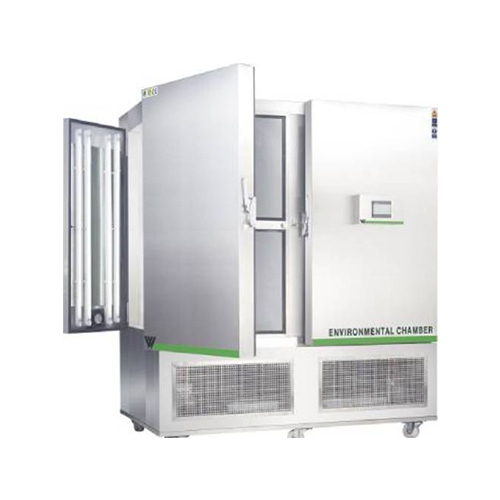
1. Start from the standard, not the catalogue
ICH Q1A(R2) stability, IEC 60068 environmental testing and ASTM protocols each imply different set points, tolerances and documentation. Write down the clause you must satisfy first — it fixes range, uniformity and logging requirements before anyone talks about price.
2. Size for the load, not the sample
Chamber volume is decided by loaded airflow, not by how much fits. A chamber packed to the walls will not hold uniformity. As a rule, plan for 30–40% free volume around the load, and specify shelf spacing with your actual trays or cartons in mind.
3. Range, ramp rate and uniformity are three different things
- Range — the extremes the chamber can reach empty.
- Ramp rate — how fast it transitions under load; this is what shock and cycling protocols actually test.
- Uniformity & stability — spatial spread and time drift at set point, typically ± 0.5 °C for pharma work.
Ask for all three under load, in writing.
A chamber that meets its spec empty and fails it loaded has not met its spec.
4. Control, data and 21 CFR Part 11
Specify PID/PLC control with profile programming, an HMI your operators can actually use, on-board logging and export by USB or Ethernet. If you are in a regulated environment, decide up front whether you need audit-trail software compliant with 21 CFR Part 11 — retrofitting it is expensive.
5. Validation and the paperwork trail
Insist on calibration certificates traceable to national standards, a mapping report at your set points, and IQ/OQ/PQ documentation. Then agree the requalification interval and who performs it before you sign.
6. Judge the supplier on service
Three questions: who commissions it, how fast do spares reach your city, and can you see a chamber running on test before dispatch? A manufacturer with in-house engineers and a service network keeps your chamber compliant; a trader does not.
The short version
- Write the standard and clause first
- Size for loaded airflow, keep 30–40% free volume
- Specify range, ramp rate and uniformity separately — under load
- Decide on Part 11 logging before ordering
- Get calibration + mapping + IQ/OQ/PQ in the quote
- Buy from a manufacturer with field engineers
Send us your protocol and load details and we will come back with a specification, drawing and quote — get a free quote.