
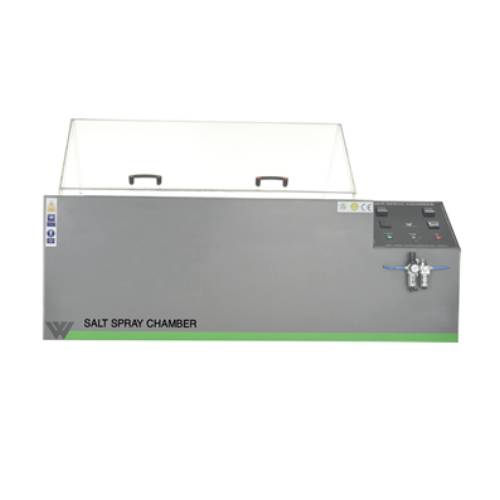
Salt Spray Test Chamber Manufacturer
Select capacity, operating range and options around the actual process requirement.
Salt Spray Test Chamber
A Salt Spray Test Chamber is essential testing equipment used to evaluate the corrosion resistance of metals, coated components, plated surfaces, and other materials exposed to corrosive environments. It helps manufacturers assess the durability of protective coatings and identify potential weaknesses before products are used in real-world conditions. ACMAS Technologies offers testing equipment solutions to support industrial quality control, product development, and corrosion resistance evaluation.
Salt spray testing is widely used in automotive, electrical, electronics, metal finishing, manufacturing, and material testing laboratories. By exposing specimens to a controlled salt-containing mist under defined conditions, a Salt Spray Test Chamber helps evaluate surface deterioration, coating performance, and corrosion-related defects. Selecting the right chamber according to the required test method, specimen dimensions, exposure duration, and applicable standards is important for obtaining consistent and meaningful results.
What Is a Salt Spray Test Chamber?
A Salt Spray Test Chamber is specialized laboratory equipment designed to expose test specimens to a controlled corrosive atmosphere containing a salt solution. The process helps evaluate how materials, metallic surfaces, and protective coatings respond to accelerated corrosion testing.
The chamber typically uses a prepared salt solution and a spray system to generate a fine mist inside an enclosed testing space. Specimens are positioned according to the applicable test procedure and exposed for a specified duration. After testing, the samples are inspected for corrosion, coating damage, blistering, or other defined signs of deterioration.
Salt spray testing supports comparative material evaluation, coating development, quality assurance, and product qualification. However, results from accelerated testing do not necessarily predict the exact service life of a product under natural environmental conditions.
Working Principle of a Salt Spray Test Chamber
A Salt Spray Test Chamber works by creating a controlled environment in which a salt solution is atomized into a fine mist and distributed around test specimens. Temperature and other operating conditions are maintained according to the selected test method and equipment configuration.
The general testing process includes:- Specimen Preparation: Samples are prepared and positioned according to the applicable testing standard.
- Salt Solution Preparation: The required salt solution is prepared using the specified concentration and water quality.
- Test Parameter Setup: The required temperature, exposure duration, and other test conditions are selected.
- Salt Mist Generation: The chamber's spray system disperses the solution into the test space.
- Controlled Exposure: Specimens remain exposed for the period specified by the test procedure.
- Inspection and Evaluation: Samples are examined for corrosion, coating degradation, and other relevant changes.
The test method determines the solution composition, operating conditions, specimen positioning, and evaluation criteria.
Key Features of a Salt Spray Test Chamber
When selecting a Salt Spray Test Chamber, buyers should consider features that support the required corrosion testing procedures.
- Corrosion Testing Environment: An enclosed chamber designed for controlled exposure to salt mist.
- Salt Solution Spray System: An arrangement for generating and distributing the specified salt solution.
- Temperature Control: Temperature regulation appropriate to the intended testing method.
- Specimen Holders: Suitable supports for positioning test panels, coated samples and components.
- Control System: Controls for relevant operating parameters and test duration, depending on the configuration.
- Corrosion-Resistant Construction: Materials selected to withstand the corrosive test environment.
- Solution Reservoir and Collection: Suitable arrangements for solution preparation, supply, and collection.
- Safety and Maintenance Access: Practical provisions for operation, cleaning, inspection, and routine maintenance.
Available features, chamber capacity, control accuracy, and operating ranges should be verified against the actual product specifications.
Applications of Salt Spray Test Chambers Across Industries
Salt Spray Test Chambers are used by manufacturers and laboratories to evaluate corrosion resistance across different materials and product categories.
- Automotive Industry: Testing suitable metal parts, fasteners, coated components, brackets and surface finishes.
- Metal Finishing Industry: Evaluating plated, galvanized, painted and other coated surfaces.
- Electrical and Electronics: Assessing corrosion resistance of suitable metallic housings, connectors, terminals, and components.
- Manufacturing Industry: Supporting quality checks for metallic products and protective finishes.
- Hardware and Fastener Production: Evaluating the corrosion performance of screws, bolts, nuts and related components.
- Research and Development: Comparing coating systems, surface treatments and material combinations.
- Quality Assurance Laboratories: Supporting product verification and routine corrosion testing against specified acceptance criteria.
The appropriate testing method depends on the material, coating system, product application, and required standard.
Types of Salt Spray Corrosion Testing
Different corrosion testing methods are used depending on the purpose of the evaluation and the material being tested.
- Neutral Salt Spray (NSS): Commonly used to assess the corrosion resistance of metallic coatings and finished products under neutral salt mist conditions.
- Acetic Acid Salt Spray (AASS): Uses an acidified salt solution for applications specified by the relevant test method.
- Copper-Accelerated Acetic Acid Salt Spray (CASS): Uses a copper-containing, acidified salt solution for specified accelerated corrosion evaluations, including certain decorative coatings.
These methods are not interchangeable. The choice depends on the applicable standard, coating type, product specification, and customer testing requirements. For example, ISO 9227 describes neutral salt spray, acetic acid salt spray, and copper-accelerated acetic acid salt spray tests. Buyers should confirm that the selected chamber configuration meets the requirements of their intended method.
Benefits of Using a Salt Spray Test Chamber
A Salt Spray Test Chamber helps manufacturers evaluate material and coating performance under controlled corrosive conditions.
- Corrosion Resistance Evaluation: Helps identify signs of corrosion and coating deterioration.
- Coating Quality Assessment: Supports evaluation of protective finishes and surface treatments.
- Quality Control: Provides a consistent environment for specified inspection and comparison procedures.
- Product Development: Helps engineers compare material choices and coating systems.
- Defect Identification: Supports the investigation of corrosion-related weaknesses in tested specimens.
- Test Documentation: Enables recording of exposure conditions and specimen observations.
- Product Qualification Support: Contributes to qualification processes when used with the required standard and acceptance criteria.
Actual performance depends on the selected test method, specimen preparation, coating characteristics and evaluation procedure. Salt spray results should not be treated as a direct guarantee of outdoor service life.
How to Select the Right Salt Spray Test Chamber
Choosing the right Salt Spray Test Chamber requires a clear understanding of the products and corrosion testing methods involved.
Consider the following factors before purchasing:- Required Test Method: Determine whether NSS, AASS, CASS, or another specified corrosion test is required.
- Applicable Standards: Identify the relevant ISO, ASTM, or customer-specific testing requirements.
- Chamber Capacity: Check the space needed for the number, size and positioning of specimens.
- Temperature Control: Confirm that the equipment supports the operating conditions required by the test method.
- Solution Handling: Review the solution reservoir, spray arrangement, and collection provisions.
- Construction Materials: Ensure that chamber materials are appropriate for prolonged exposure to corrosive solutions.
- Control and Monitoring: Assess the need for programmable controls, monitoring and test records.
- Maintenance Requirements: Consider cleaning, calibration where applicable, routine inspection and technical support.
Discussing these requirements with the supplier helps ensure that the selected equipment is suitable for the intended corrosion testing application.
Salt Spray Test Chamber Solutions from ACMAS Technologies
ACMAS Technologies provides laboratory and environmental testing equipment solutions for industrial and research applications. Its Salt Spray Test Chamber offering is intended to support corrosion resistance evaluation for relevant materials, coatings, and components.
Selecting an appropriate chamber involves confirming the required test method, specimen capacity, operating conditions and applicable standards. Buyers should review the product specifications and discuss their testing objectives to determine a suitable equipment configuration.
Explore the Salt Spray Test Chamber and testing equipment solutions from ACMAS Technologies to learn more about the available product range.
Enquire About a Salt Spray Test Chamber
Looking for a Salt Spray Test Chamber for corrosion resistance testing in your laboratory or manufacturing facility? Contact ACMAS Technologies to discuss your testing method, specimen dimensions, coating evaluation requirements, and desired chamber configuration.
Request product information and a quotation to identify a suitable solution for your corrosion testing and quality assurance needs.