
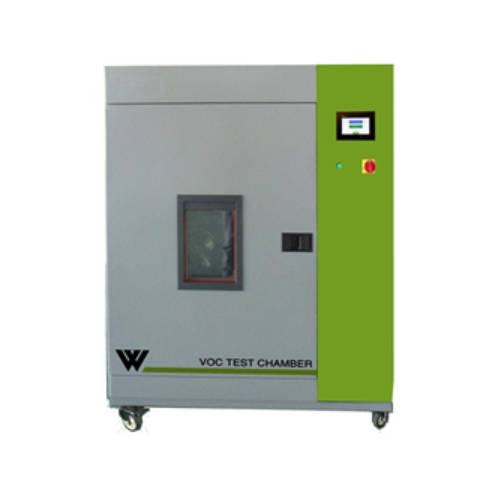
VOC Test Chamber - Emission Test
Select capacity, operating range and options around the actual process requirement.
VOC Test Chamber
A VOC Test Chamber is designed to evaluate volatile organic compound (VOC) emissions from materials, products, and components under controlled environmental conditions. VOC testing plays an important role in assessing indoor air quality, material emissions, product safety, and environmental performance across industries such as automotive, construction, furniture, electronics, healthcare, and building materials.
ACMAS Technologies provides testing equipment solutions designed to support laboratory testing, product evaluation, and quality assurance requirements. A VOC Test Chamber can help create controlled test conditions for evaluating emissions from materials such as plastics, adhesives, paints, coatings, flooring, textiles, furniture components, and automotive interior parts.
By maintaining defined testing conditions, a VOC testing system helps laboratories and manufacturers obtain consistent results and support material development, product qualification, and compliance-related testing activities.
What Is a VOC Test Chamber?
A VOC Test Chamber is a controlled enclosure used to assess the release of volatile organic compounds from materials and products. These compounds can evaporate into the surrounding air under specific temperature, humidity, and ventilation conditions.
The chamber provides a controlled environment in which samples can be tested according to a selected procedure. The air inside the chamber may be collected and analyzed using suitable sampling equipment and analytical instruments to determine the type and concentration of emitted compounds.
VOC emission testing is particularly relevant for products intended for indoor environments, vehicle interiors, workplaces, and other applications where material emissions can affect air quality.
The chamber configuration depends on the sample size, required environmental conditions, air exchange rate, analytical method, and applicable testing standard.
Working Principle of a VOC Test Chamber
The working principle of a VOC Test Chamber involves exposing a test sample to controlled environmental conditions and evaluating the compounds released into the chamber air.
- 1. Sample Preparation: The material or product is prepared according to the selected testing procedure. Sample dimensions, conditioning, handling, and storage can influence the results and should follow the applicable method.
- 2. Controlled Environmental Conditions: The sample is placed inside the chamber, where specified conditions such as temperature, relative humidity, and ventilation or air exchange are established. These conditions help create a repeatable testing environment.
- 3. VOC Emission and Air Sampling: During the test, volatile compounds released by the sample accumulate or are carried through the chamber airflow, depending on the test design. Air samples are collected at defined intervals using suitable sampling equipment.
- 4. Laboratory Analysis: Collected samples are analyzed using an appropriate analytical method, such as gas chromatography-based techniques. The method selected depends on the compounds being investigated and the requirements of the test.x
- 5. Results and Evaluation: The measured emissions are evaluated against the relevant product specification, customer requirement, or applicable testing criteria. Results can support material comparison, product development, and quality assurance.
Key Features of a VOC Test Chamber
The design of a VOC Test Chamber should reflect the required test method, sample type, and laboratory workflow. Depending on the selected configuration, important features may include:
- Controlled temperature: Helps maintain the specified thermal conditions during emission testing.
- Humidity management: Supports testing procedures that require defined relative humidity.
- Airflow and air exchange control: Helps maintain the required ventilation conditions inside the chamber.
- Suitable chamber materials: Internal surfaces should be selected to minimize unwanted contamination or interference with VOC measurements.
- Sample accommodation: Chamber dimensions and sample holders should suit the size and number of samples being evaluated.
- Monitoring and control system: Supports adjustment and monitoring of selected operating parameters.
- Data recording: Where provided, enables recording of relevant environmental conditions throughout the test.
- Sampling compatibility: The chamber design should support the sampling ports, tubing, and analytical workflow required by the chosen method.
Exact specifications, control accuracy, chamber volume, and available options should be confirmed against the selected ACMAS configuration before purchase.
Applications of VOC Test Chambers
VOC emission testing supports multiple industries where material emissions and indoor air quality are important considerations.
- Automotive Industry: Automotive manufacturers and suppliers may evaluate emissions from dashboard materials, seat fabrics, interior trims, adhesives, carpets, plastics and other cabin components.
- Building and Construction Materials: Testing may be performed on flooring, wall coverings, insulation, sealants, paints, coatings and other construction materials to help assess their emission characteristics.
- Furniture and Interior Products: Furniture manufacturers can evaluate emissions from wood-based panels, upholstery, surface finishes, adhesives, and assembled furniture components.
- Plastics and Polymer Manufacturing: VOC testing helps assess emissions from polymer materials, molded components, packaging materials and other plastic products under specified conditions.
- Paints, Coatings and Adhesives: Manufacturers can investigate volatile compound emissions from coatings, bonding materials, sealants, and related formulations.
- Research and Quality Control Laboratories: Research organizations and quality control laboratories use controlled emission testing to compare materials, investigate formulations, and support product development.
Relevant VOC Testing Standards and Methods
VOC testing requirements vary according to the material, product category, target compounds, and intended market. Depending on the application, relevant methods may include:
- ISO 16000 series: Includes methods addressing indoor air quality and the determination of VOCs in indoor air and emissions from certain products.
- ISO 12219 series: Addresses VOC emissions from materials and components used in road vehicles.
- ASTM D5116: A guide for small-scale environmental chamber determination of organic emissions from indoor materials and products.
- EN 16516: Addresses the assessment of release of dangerous substances from construction products into indoor air.
These standards do not all apply to the same samples or test conditions. The correct method must be selected based on the product category and testing objective. The chamber must be configured to meet the specific method requirements; using a chamber alone does not establish compliance or certification.
Benefits of Using a VOC Test Chamber
- Improved Testing Consistency: Controlled temperature, humidity, and airflow can help laboratories reproduce specified test conditions and compare samples more reliably.
- Better Material Selection: Emission data can help manufacturers compare alternative raw materials, coatings, adhesives, and product formulations during development.
- Support for Indoor Air Quality Assessment: VOC testing provides information that can contribute to the evaluation of materials used in enclosed spaces, buildings, and vehicle interiors.
- Enhanced Quality Control: Routine testing can help identify variations between materials, production batches, or suppliers when an appropriate testing procedure is followed.
- Product Development Support: Research teams can use emission results to investigate formulation changes and assess the impact of material selection on product performance.
How to Choose the Right VOC Test Chamber
Selecting the appropriate VOC Test Chamber requires careful consideration of the application and testing procedure.
- Define the test method: Identify the applicable ISO, ASTM, EN, automotive, or customer-specific method.
- Determine chamber volume: Select a chamber size that accommodates the samples and meets the required loading and testing conditions.
- Review temperature and humidity requirements: Confirm that the equipment can maintain the conditions specified by the chosen method.
- Evaluate airflow and air exchange: Check the ventilation requirements and how the system controls or verifies air exchange.
- Assess contamination control: Consider chamber surface materials, sealing, cleanliness, and background VOC levels.
- Confirm sampling compatibility: Ensure the design supports the required sampling and analytical equipment.
- Review monitoring and documentation: Determine whether the application requires continuous data logging, calibration records, or specific reporting procedures.
- Discuss customization: Confirm the required options, installation conditions, service support, and validation requirements with the supplier.
VOC Test Chamber Solutions by ACMAS Technologies
ACMAS Technologies offers laboratory and industrial testing equipment solutions for applications that require controlled test environments. For VOC emission testing, the appropriate chamber design should be selected according to the target material, chamber volume, environmental parameters, air exchange requirements, sampling method, and applicable testing standard.
Before finalizing a system, laboratories should confirm the required VOC test method and analytical workflow with the equipment supplier. This helps ensure that the chamber configuration is suitable for the intended application.
Explore the ACMAS Technologies Test Chambers range to review available testing equipment and discuss your application requirements.
A VOC Test Chamber supports the controlled evaluation of volatile organic compound emissions from materials and products used in automotive interiors, construction, furniture, plastics, coatings, and other industries. By selecting suitable chamber conditions, sampling arrangements, and analytical methods, laboratories can generate useful emission data for product development, material comparison, and quality assurance.
ACMAS Technologies can help you identify suitable testing equipment based on your application and laboratory requirements.
Contact ACMAS Technologies today to discuss your VOC testing needs and request information about a suitable chamber configuration.