
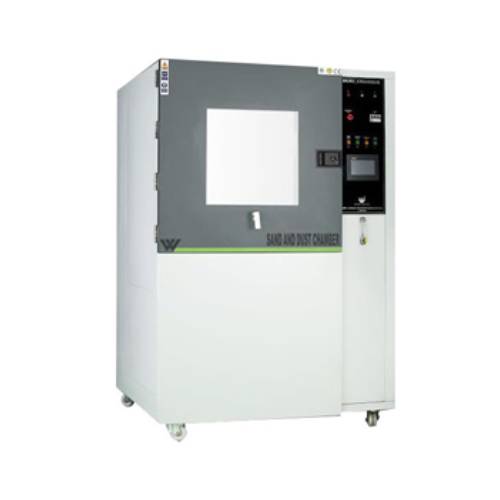
Sand Dust Test Chamber Manufacturers&Suppliers in India
Select capacity, operating range and options around the actual process requirement.
Sand Dust Test Chamber Manufacturers & Suppliers in India
A Sand Dust Test Chamber is specialized environmental testing equipment used to evaluate the resistance of products, components, and enclosures to airborne dust and sand exposure. It helps manufacturers assess whether dust can enter product housings, affect moving parts, or interfere with electrical and mechanical performance under specified test conditions. ACMAS Technologies offers environmental testing equipment solutions to support product development, quality assurance, and reliability evaluation across industrial applications.
Dust and sand exposure can affect products used in outdoor environments, industrial facilities, transportation systems, and demanding operating conditions. A Sand Dust Test Chamber creates a controlled testing environment that helps manufacturers identify potential weaknesses in enclosure design, seals, joints, and protective barriers. Selecting the appropriate chamber according to the required test method, specimen dimensions, dust characteristics, and applicable standards is essential for obtaining meaningful and repeatable results.
What Is a Sand Dust Test Chamber?
A Sand Dust Test Chamber is an environmental testing enclosure designed to expose products and components to controlled dust or sand conditions. Depending on its configuration, the equipment can simulate airborne dust circulation or sand exposure to evaluate resistance to particulate ingress and related environmental effects.
These chambers are commonly considered for testing electrical enclosures, automotive components, lighting products, industrial equipment, connectors, and outdoor devices. The tests help determine whether dust accumulation or penetration could affect product functionality, durability, or protective performance.
The appropriate test configuration depends on the product's intended environment and the applicable testing procedure. Dust testing and sand testing can involve different particle characteristics, exposure conditions, and test objectives, so the required capability should be confirmed before equipment selection.
Working Principle of a Sand Dust Test Chamber
A Sand Dust Test Chamber operates by creating controlled particulate exposure around a test specimen inside an enclosed testing space. Depending on the design, a circulation system disperses specified dust or sand particles to establish the required test conditions.
The general testing process includes:
- Specimen Preparation: The product or enclosure is prepared and positioned according to the applicable test procedure.
- Test Parameter Setup: Required exposure duration, dust characteristics, airflow conditions, and other applicable parameters are established.
- Particulate Circulation: The chamber circulates dust or sand according to the selected test method and equipment configuration.
- Controlled Exposure: The specimen remains exposed for the specified period under defined conditions.
- Post-Test Inspection: The specimen is examined for dust penetration, accumulation, or other relevant effects.
- Result Evaluation: Findings are compared with the acceptance criteria defined by the applicable standard or product specification.
The precise procedure depends on the required dust or sand test, specimen type, and chamber design.
Key Features of a Sand Dust Test Chamber
When selecting a Sand Dust Test Chamber, buyers should consider the features needed to support their intended environmental testing applications.
- Controlled Dust Circulation: A suitable arrangement for distributing particulate matter throughout the test space.
- Airflow Regulation: Control of airflow conditions where required by the selected test method.
- Suitable Chamber Capacity: Space to accommodate the dimensions and positioning requirements of the specimen.
- Test Parameter Control: Management of relevant exposure conditions and test duration.
- Specimen Mounting Arrangements: Suitable supports for positioning products and enclosures during testing.
- Dust-Resistant Construction: Materials and design appropriate for repeated exposure to abrasive or fine particulate matter.
- Inspection and Maintenance Access: Practical access for cleaning, inspection, and routine maintenance.
- Safety Provisions: Appropriate operating safeguards and dust-handling arrangements for the intended application.
Available features, airflow capabilities, particle requirements, and control functions should be verified against the actual equipment specifications.
Applications of Sand Dust Test Chambers Across Industries
Sand Dust Test Chambers are used to evaluate products designed to operate in environments where airborne particles or sand exposure may occur.
- Automotive Industry: Testing suitable vehicle components, connectors, housings, and protective enclosures for dust resistance.
- Electrical and Electronics: Evaluating electrical enclosures, electronic housings, switches, and connectors for particulate ingress.
- Lighting Industry: Testing outdoor lighting fixtures and protective housings intended for dusty environments.
- Industrial Equipment: Assessing suitable machinery components, control panels, and equipment enclosures.
- Aerospace and Transportation: Supporting specified environmental testing of suitable components exposed to dust or sand.
- Consumer Products: Evaluating devices and equipment intended for outdoor or dusty operating conditions.
- Research and Quality Assurance Laboratories: Supporting product development, environmental qualification, and controlled testing procedures.
The required test method and acceptance criteria depend on the product's intended use and relevant industry requirements.
Dust Ingress Testing and IP5X and IP6X Protection
Dust ingress testing is important when evaluating the protection provided by electrical enclosures and other products against solid particles. Under IEC 60529, the IP code includes classifications for protection against dust and dust ingress.
- IP5X: Dust-protected. Dust ingress is not completely prevented, but any ingress must not occur in a quantity or location that interferes with satisfactory operation or safety under the applicable requirements.
- IP6X: Dust-tight. No dust ingress is permitted under the specified test conditions.
These classifications involve defined test procedures, including requirements related to the enclosure, exposure conditions, and evaluation. The appropriate procedure depends on the applicable standard and product specification.
Sand exposure testing may also be required for products intended for abrasive or desert-like environments. Such testing is not automatically equivalent to IP5X or IP6X dust ingress testing. Buyers should confirm whether the equipment must support dust circulation, sand exposure, or both.
Benefits of Using a Sand Dust Test Chamber
A suitable Sand Dust Test Chamber helps manufacturers assess product resistance to particulate exposure under controlled conditions.
- Dust Ingress Evaluation: Helps identify potential weaknesses in enclosure seals, joints, and protective barriers.
- Product Reliability Assessment: Supports evaluation of products intended for dusty operating environments.
- Design Improvement: Helps engineers investigate enclosure design and protection performance.
- Quality Control Support: Provides a controlled environment for specified testing procedures.
- Environmental Qualification: Contributes to product verification when used with the appropriate test method.
- Test Documentation: Supports recording observations and relevant testing conditions.
- Product Development: Helps manufacturers compare designs and evaluate improvements to dust protection.
Actual results depend on the specimen, test conditions, chamber configuration, and applicable acceptance criteria. Dust testing alone does not guarantee performance in every real-world environment.
How to Select the Right Sand Dust Test Chamber
Choosing a suitable Sand Dust Test Chamber requires careful consideration of the intended product application and testing requirements.
- Required Test Standard: Identify the applicable IEC, ISO, MIL-STD, or customer-specific test procedure, as relevant.
- Dust or Sand Exposure: Determine whether the application requires fine dust circulation, sand exposure, or separate test configurations.
- Specimen Dimensions: Confirm the chamber's usable volume and specimen mounting requirements.
- Airflow and Exposure Conditions: Verify that the equipment can achieve the conditions specified by the required test method.
- Test Duration and Controls: Assess the need for programmable operation and monitoring of relevant parameters.
- Material Compatibility: Consider the effects of abrasive particles on chamber components and maintenance requirements.
- Safety and Cleaning: Review dust handling, cleaning procedures, and applicable occupational safety considerations.
- Technical Support: Consider installation, maintenance, calibration where applicable, and after-sales assistance.
Discussing these factors with the supplier helps ensure that the selected equipment is suitable for the required testing application.
Sand Dust Test Chamber Solutions from ACMAS Technologies
ACMAS Technologies provides laboratory and environmental testing equipment solutions for industrial and research applications. Its test chamber product range supports different environmental evaluation requirements, and the appropriate Sand Dust Test Chamber configuration should be selected according to the intended test procedure and specimen characteristics.
Before selecting equipment, customers should confirm the required dust or sand exposure method, chamber capacity, operating parameters, and applicable standards. Reviewing the product specifications and discussing the application requirements helps identify a suitable testing solution.
Explore the test chamber range from ACMAS Technologies and contact the team to discuss your dust resistance testing requirements.
Enquire About a Sand Dust Test Chamber
Looking for a Sand Dust Test Chamber for industrial product evaluation, dust ingress testing, or environmental qualification? Contact ACMAS Technologies to discuss your specimen dimensions, required test standards, dust or sand exposure conditions, and equipment configuration.
Request product details and a quotation to identify a suitable solution for your laboratory or manufacturing facility.